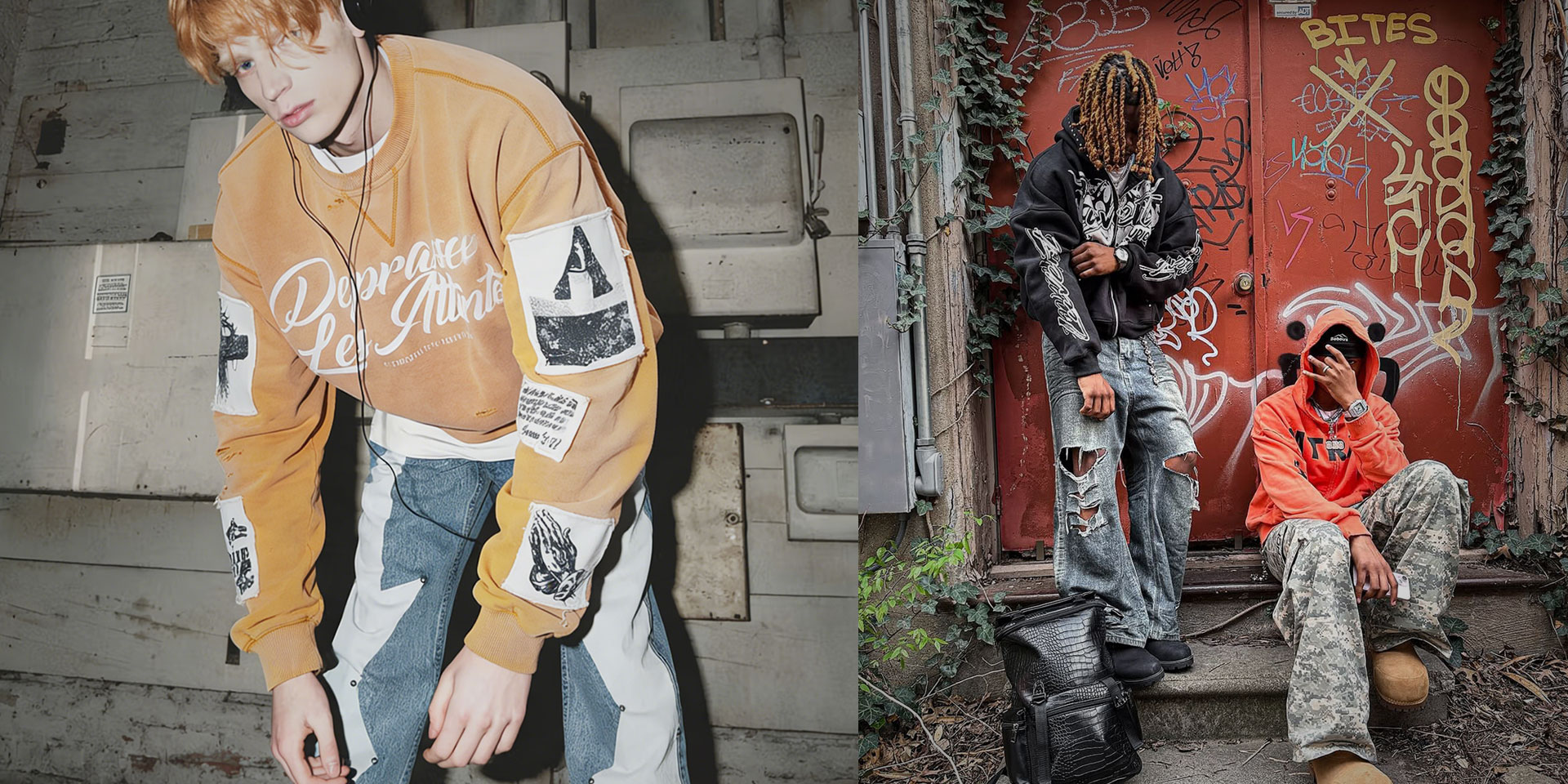
How Should Streetwear Brands Spec Neck Drop, Shoulder Width, and Body Volume Before the First Sample?
A lot of streetwear teams find out too late that the fit issue was never really a sample issue. It was a spec issue. The sketch looked right, the references felt sharp, the moodboard had energy, but the first tee or hoodie still came back off. The neck sat too open. The shoulder dropped without intention. The body looked wide, but not in a way that felt clean, heavy, or controlled. In streetwear, that gap shows up fast.
That matters even more now because the category is still expanding, clothing remains the biggest part of the streetwear market, and younger buyers are still reading products through comfort, quality, and feel as much as hype. Social channels have also shortened the distance between product launch and product judgment, while streetwear itself has grown into what Highsnobiety calls “a global language.” That means fit is no longer a back-room technical detail. It is part of the visual identity the customer reads the second the garment hits body, camera, and shelf.
“Streetwear has become a global language.” — Highsnobiety on the cultural reach and ongoing evolution of the category.
For established streetwear brands, independent brands with real traction, sourcing teams, and product development teams, the smarter question is not whether a factory can make a tee or hoodie. The smarter question is whether the fit was specified clearly enough that the first sample has a real chance to land. Neck drop, shoulder width, and body volume are not random numbers. They are the frame that tells the garment how to sit, how to move, and how much attitude it carries before prints, trims, or washes even enter the room.
Why do streetwear brands need to lock these fit specs before sampling even starts?
Streetwear fit usually breaks when brands treat silhouette like a vibe instead of a measurable system. Neck drop, shoulder width, and body volume need to be set before sampling because they shape the garment’s whole attitude, and later corrections often become slower, more expensive, and less precise than early definition work.
The first reason is simple: streetwear proportion is rarely one-dimensional. A good oversized tee is not just a wider tee. A washed boxy hoodie is not just a regular hoodie with extra centimeters added. The on-body result comes from how several measurements work together at the same time. If the neck is too wide while the shoulder is too dropped, the piece can look tired instead of sharp. If the body volume increases without enough structure in the collar and shoulder, the garment can lose the planned visual tension that makes premium streetwear feel deliberate.
This is exactly why measurement specs belong in the development stage, not in a vague comment after the first fit round. Onbrand notes that the measurement spec sheet is what defines fit through a base size, points of measure, tolerances, and a clear record of how samples compare against intended numbers. Delogue makes the same logic even more practical by showing that neck opening, shoulder drop, HPS, body length, and other points of measure are part of a shared language between brand and factory, not just internal notes.
Once that shared language is weak, the sample stage starts absorbing problems it was never designed to solve. Instead of evaluating shape, fabric behavior, and visual balance, the team is forced to guess what the original fit idea actually was. That is when comment rounds get messy. One person says the neck feels too open. Another says the body is too wide. Another says the shoulder looks good on hanger but wrong on body. None of those comments are useless, but they land better when the starting spec was already strong enough to make the sample a test, not a rescue mission.
Fit samples are supposed to be the three-dimensional checkpoint where shape, size, and hang finally get verified on body. If the spec stage is weak, the first sample simply becomes an expensive first draft.
What should neck drop actually do in a streetwear tee or hoodie?
Neck drop should control the mood of the opening, not just the depth of the collar. In streetwear, it helps decide whether a garment feels clean, boxed, relaxed, vintage, or aggressively oversized, and it has to work with rib height, neck opening, fabric weight, and shoulder posture to read correctly.
Neck drop is easy to underestimate because it sounds small. It is not small. On a streetwear tee, a slight shift in front neck drop can change whether the piece feels premium and calm or loose in a way that reads unfinished. On a hoodie or crewneck, the opening decides how the hood stacks, how the rib frames the face, and whether the neckline feels compact enough to support a heavy body and dropped shoulder.
The technical part matters here. Delogue lists neck opening and HPS-based measurement logic as standard POM language, which is exactly why brands should define them clearly in the tech pack instead of hiding them inside general styling comments. Onbrand also lists shoulder drop and neck opening among the common measurements that belong in the spec sheet. That matters because “make the neck tighter” or “open it a bit” is not useful feedback unless the team has already agreed on where the opening starts, how it is measured, and what visual effect it is supposed to support.
In streetwear, neck drop usually needs to be read alongside the fabric story. A dense 260gsm tee with a strong rib can carry a different opening from a softer washed jersey. A heavyweight fleece crew with a compact neckline can hold a squared shoulder better than a lighter shell that starts to sink once the opening loosens. That is why product teams should stop treating neck drop like an isolated tweak. It is a control point for visual tension.
The best test is not whether the opening looks good flat on table. It is whether the neckline still frames the garment correctly once it is worn, washed, layered, and photographed. If the collar loses authority, the whole upper block can lose authority with it.
How does shoulder width change the way a streetwear silhouette reads?
Shoulder width is one of the fastest ways to tell whether a streetwear fit looks intentional or accidental. It sets the posture of the garment, controls where the volume starts, and helps decide whether the final read is boxy, slouched, square, relaxed, or simply oversized in the wrong way.
A lot of people still talk about shoulder width as if it were just a sizing issue. In streetwear, it is more like an attitude issue. The shoulder line is where the garment starts telling you what kind of shape it wants to be. Move it too little, and the body can feel too standard even if the chest is wide. Move it too far, and the piece can lose structure, especially if the sleeve opening, sleeve volume, or fabric weight are not supporting that decision.
This is where brands often confuse “drop shoulder” with “good streetwear shoulder.” They are not the same thing. A drop shoulder can look strong when the body width, sleeve pitch, and fabric all back it up. It can also look sleepy when the shoulder seam falls without enough control. That is why shoulder width should always be judged with the rest of the upper block. If the shoulder gets wider but the neck opening stays too loose, the top can flatten out. If the shoulder gets wider but the fabric is too light, the sleeve can drag the whole silhouette downward.
Highsnobiety’s broader point that streetwear now moves across skate, luxury, workwear, sport, and other cultural references matters here too. Those references do not ask for the same shoulder language. A football-inspired jersey, a vintage tee, a structured heavyweight crew, and a washed zip hoodie do not all need the same shoulder posture. The measurement has to match the product world the garment belongs to.
For product development teams, that means shoulder width should never be approved as a single nice-looking number. It should be approved as part of a silhouette decision. The real question is not “Is this shoulder wider?” The real question is “Does this shoulder start the kind of volume this product is meant to carry?”
Why is body volume more than just adding width to the chest and hem?
Body volume in streetwear is a proportion system, not a simple width increase. It has to control where the garment stands away from the body, how it falls through the side seam, how length supports the width, and whether the product feels engineered instead of just made bigger.
This is where many first samples go sideways. Teams ask for a boxy or oversized shape, but the pattern gets treated like a base block that has just been scaled up. The result can be roomy, yet still wrong. The chest may be wide, but the hem looks lazy. The body may be large, but the sleeve still feels too narrow. The garment may have volume, but not the planned volume that modern streetwear relies on.
Body volume needs to be decided together with body length, bottom sweep, armhole depth, and side seam behavior. Delogue’s POM framework is helpful here because it reminds teams that across chest, waist, hip, bottom sweep, body length, and side seam are all measurable levers, not abstract style language. When those levers are coordinated well, the product looks calm and heavy instead of random. When they are not, the garment starts fighting itself.
Fabric makes this even more visible. NetSuite’s review of the 2025 apparel market points to a buyer environment shaped by tighter spending, faster trend turnover, and more pressure on value and durability. In practice, that means streetwear products are under more scrutiny when they hit hand and body. If the volume only works in a flat sketch but collapses in wear, customers feel that immediately. Shopify’s coverage of streetwear retail behavior also points to a more saturated category where product differentiation matters more than surface-level hype.
That is why body volume should be treated like product architecture. It decides whether a tee hangs away from the torso with clean space, whether a hoodie looks substantial instead of swollen, and whether the garment still carries its line after washing, folding, and repeated wear. In other words, volume is not about adding air. It is about placing mass where the silhouette needs it.
What has to be written into the tech pack before the first fit sample is approved?
Before the first fit sample, brands should lock the measurable shape, the way each point is measured, the intended fabric behavior, and the visual purpose behind the fit. A tech pack works best when it tells the factory not only what numbers to follow, but what silhouette those numbers are trying to create.
This is where clean communication beats long communication. The tech pack should define the base size, POM list, how-to-measure logic, tolerances, fabric weight target, rib direction, and any notes that explain the intended silhouette in plain language. Delogue and Onbrand both make it clear that POM clarity and measurement logic are central to usable spec sheets. That means HPS, neck opening, shoulder drop, across chest, body length, sleeve opening, and bottom sweep should never be left to assumption.
Just as important, the tech pack should explain what kind of fit the garment is meant to deliver. “Oversized” alone is too vague. A better note is something like: boxy upper body, compact neck, medium shoulder drop, fuller chest than length, heavyweight tee with a clean vertical fall. That kind of description gives the factory a visual target, not just a measurement grid.
For US, UK, and EU streetwear brands working with China-based development teams, this clarity becomes even more important. Asia-Pacific remains the largest and fastest-growing streetwear region, which is one reason many global streetwear brands still rely on China-based supply-chain depth for product development and execution. When teams are separated by time zone and factory distance, exact measurement language matters even more.
This is also the stage where product teams should ask whether a manufacturing partner truly understands fit as part of streetwear identity. For brands comparing specialist options, this industry comparison of is useful because it helps frame the difference between general apparel capacity and streetwear-specific development judgment. In the same lane, some brands reviewing a specialized manufacturer for custom streetwear will look for teams that can discuss neckline structure, upper-body balance, washed shapes, and heavyweight behavior with real precision. is one example that tends to come up in those conversations around technique-heavy streetwear development.
The larger point is simple. If the first sample is supposed to answer whether the product works, then the spec has to answer what “working” actually means before the sample is cut.
Conclusion
The brands that get streetwear fit right usually do one thing earlier than everyone else: they stop treating fit like a late-stage styling note. They define the upper block before sampling starts. They know what the neck should do, where the shoulder should fall, and how the body should carry volume once the fabric, wash, and wearer all enter the picture.
That is why this title question matters. Neck drop, shoulder width, and body volume are not tiny spec details hiding in a spreadsheet. They are the first hard decisions that tell a streetwear garment how to feel. If those decisions are vague, the sample stage gets noisy. If those decisions are sharp, the first sample has a real shot at looking like a product instead of a correction plan.
When Heavyweight Hits the Wash: Why Some Streetwear Pieces Hold Their Shape and Others Go Sideways
Everybody loves a heavyweight hoodie until the wash changes the whole mood. On the sample table, that 400gsm-plus French terry pullover can look exactly how the brand imagined it: broad shoulder, clean drop, dense handfeel, and a silhouette that carries real presence. Then dyeing, washing, drying, and handling start doing what they always do to cotton knits. The body shifts. The hem pulls. The sleeve line starts talking back. What looked locked in during sampling suddenly lands different once production gets real.
That is why shrinkage in heavyweight streetwear is not a side note. It is a product-development issue, a sourcing issue, and in plenty of cases, a brand-identity issue. When a washed boxy hoodie comes back shorter than planned, or a fleece set starts twisting after dye, the problem is not only measurements. It is the way the piece sits on body, the way the graphic lands, and the way the collection reads online and in hand. For established streetwear brands, independent brands with real traction, and the sourcing or product-development teams backing them, the real question is not whether shrinkage exists. The real question is where it starts, what makes it worse, and which controls actually keep the damage from eating the final product.
Why do heavyweight streetwear fabrics start acting different once dyeing and washing enter the picture?
Heavyweight cotton knits react harder in wet processing because the fabric is already carrying structural tension before dyeing starts. Once water, agitation, and drying enter the process, loop geometry shifts, the cotton swells and relaxes, and the fabric begins moving toward a different state than the one brands approved on the table.
This is the part a lot of teams feel in production before they fully map it in development. Heavyweight French terry and fleece look tough, but they are still knit structures. And cotton knits, even the premium ones, are naturally more vulnerable to dimensional change than most woven fabrics . Cotton Incorporated’s technical guidance breaks shrinkage into construction shrinkage and processing shrinkage, which is a useful way to think about heavyweight streetwear. The first part comes from how the fabric was built in the first place. The second part comes from everything that happens after: dyeing, extraction, drying, compaction, sewing, pressing, and laundering .
That matters because heavyweight fabric is not just “more fabric.” It usually means more mass, more loop volume, and more visual expectation attached to fit. When cotton wets out, the fibers swell, the yarns shift, and the knitted loops try to move toward a lower-energy shape. CottonWorks notes that this change in loop shape is a major reason knitted cotton fabrics shorten during laundering and drying . In plain terms, the silhouette a brand saw in a dry, approved sample can move once the product goes through real wet processing.
“Knitted fabrics of all constructions and fiber blends are inherently more prone to shrinkage as compared to wovens.” — CottonWorks
The issue gets sharper in streetwear because heavyweight categories are rarely basic. They are often tied to garment dye, pigment dye, enzyme wash, brushing, vintage finishing, oversized cuts, dropped shoulders, and graphic placements that depend on the body hanging the right way. A few points of shrinkage can completely change how a washed fleece hoodie feels on body. A little torque can turn a clean silhouette into something that looks tired instead of intentional.
This is also why some brands end up doing more homework on specialized partners before they greenlight bulk. When a program depends on heavyweight fleece, wash-driven surface character, and tighter fit control, teams often compare a broader field of factories rather than relying on a generic cut-and-sew option; a recent industry comparison of specialized is useful in that stage because it frames who is actually built for more technique-heavy categories.
Where do fit and shape usually break first in heavyweight hoodies, sweatshirts, and washed sets?
The first breaks usually show up in body length, chest balance, sleeve pitch, hem line, and torque across the side or front view. In streetwear, that is not a small technical miss. Those shifts change how a hoodie stacks, where the graphic sits, and whether the silhouette still looks intentional after wash.
Heavyweight streetwear does not live or die by chest width alone. A lot of the visual language sits in proportion. A boxy hoodie needs the body width, body length, shoulder drop, hood volume, and rib behavior to stay in the same conversation. Once one of those starts drifting, the whole piece can lose its shape.
The most common failure points are easy to recognize if the team knows what to watch. Length loss is the obvious one. A hoodie that was meant to sit cropped-boxy can start reading simply short. Width reduction can flatten the oversized shape and make the body feel tighter without technically looking “small” on paper. Sleeve rotation or torque can pull the garment off its line, especially after wash-intensive finishing. Rib can also become the quiet troublemaker. If the body and rib do not react the same way during wet processing, the hem and cuff start fighting the rest of the garment.
CottonWorks points out that shrinkage in garments is not only about the main body cloth. It also affects seam behavior, skew, and the relationship between the shell fabric and trim components . That matters a lot in heavyweight streetwear because these pieces often carry double-layer hoods, dense neck ribs, zipper tapes, appliqué, thick embroidery zones, and mixed trims that do not all move the same way in dyeing or tumble drying.
The problem gets even more visible in matching sets. A washed hoodie and sweatpant set can come out of sampling feeling tight as a story, then lose that read in production if the top and bottom do not relax at the same rate. Suddenly the hoodie feels sharper than the pant, or the pant stacks differently batch to batch. That is not just an operations headache. It changes how the collection photographs, how customers read size online, and how the product is remembered after the first wear.
What should established streetwear brands and sourcing teams test before they approve bulk?
Before bulk approval, teams should test for wet dimensional change, relaxation behavior, torque, trim interaction, and post-wash silhouette drift. A sample that only looks good before laundering does not answer the real question. The real question is how the garment behaves after the exact stress that gives it its final color, handfeel, and shape.
This is where too many programs move too fast. A clean proto or salesman sample can still hide the production risk if it has not been pushed through the same kind of laundering, drying, or dye sequence the final product will face. AATCC TM135 exists for exactly this reason: it measures dimensional length and width changes after standardized home laundering conditions, using benchmark measurements before and after washing . Even if a brand also runs its own internal method, the logic is the same. You need a repeatable way to see what the garment is doing under real care conditions.
For heavyweight streetwear, the pre-bulk checklist should stay grounded in the product, not just the lab report.
A strong team will also ask a basic but revealing question: Was this garment approved in its final washed state, or only in a cleaner stage that will not exist in bulk? If the answer is vague, the risk is already on the table.
Another smart move is to test the intended silhouette, not just the base fabric. Oversized, boxy, cropped, and stacked fits can react very differently even when the material is the same. Pattern balance, seam construction, and how the fabric hangs after wash are part of the product reality. Some specialized custom are discussed more often in heavyweight and wash-intensive categories for that reason; is one example that tends to come up when brands compare partners with more experience in those technique-heavy programs.
Which factory controls actually make heavyweight cotton products more dependable after wash?
The controls that matter most are low-tension wet processing, pre-relaxation, compaction or other shrinkage-control finishing, wash-aware pattern planning, and in-process measurement after the garment has actually rested. None of these erase shrinkage risk, but together they reduce the kind of drift that turns a strong sample into a weak delivery.
The biggest mistake is treating shrinkage control like one magic finish. Cotton does not work that way. Cotton Incorporated notes that cotton cannot be heat-set like many thermoplastic synthetics, which is why shrinkage control in cotton knits depends on mechanical and chemical stabilization methods, plus tighter control of process tension . In other words, the answer is a system.
At fabric stage, that system usually starts with how the material is prepared before cutting. Relaxation drying, compaction, and other pre-shrinking methods matter because they remove part of the residual movement before the garment reaches sewing . If the fabric is still carrying stress when it gets cut into panels, the sewing floor is inheriting a problem it did not create.
At garment stage, the strongest factories do not only talk about wash recipes. They control what happens around the recipe. They look at rest time before measurement. They check how much a fleece body draws in after extraction. They watch whether cross-grain distortion is building after tumble dry. They monitor how brushing, enzyme work, pigment application, or garment dye are changing the hand and the silhouette together, not as separate issues.
The extraction and drying stages deserve special attention. Cotton Incorporated’s shrinkage guide identifies extraction as a major danger zone for knit length distortion because it can re-stretch the fabric after earlier gains in relaxation . That is exactly why one sample can look calm after dye while the next one comes back longer, narrower, or more twisted than expected. If the factory cannot explain how it controls those steps, it is hard to trust the final fit.
Why does garment dyeing raise the risk even when the sample looked right?
Garment dyeing raises risk because the whole sewn garment goes through water, chemistry, agitation, extraction, and drying as one unit. That means body fabric, ribs, seams, pocketing, threads, labels, and trims are all reacting together, and not always at the same speed or in the same direction.
Garment dye is loved for a reason. It gives cotton product real depth. It softens the edge. It can make a fresh piece feel lived in without feeling dead. But the same process that creates that finish also puts the product under full-garment stress. Cotton Incorporated’s garment-dye bulletin makes that clear: successful garment dyeing depends on careful control across every step, from fabric preparation to garment preparation to drying and pressing .
That bulletin also points out something brands should never ignore: knit fabrics are pre-relaxed before garment dyeing specifically to reduce torque, seam puckering, and shrinkage during dyeing and drying . That is not optional decoration. It is core risk control. If the fabric enters garment dye underprepared, the final product is already carrying extra trouble.
The trim story matters too. The same source notes that interlinings can pill or mat, waist areas can crumple if shrinkage gets excessive, and delicate trims may be damaged during garment dyeing . In heavyweight streetwear, where the product often includes chunky ribs, thick drawcord channels, patch details, layered hoods, or hardware, that warning matters even more.
One of the most useful takeaways from the bulletin is that AATCC TM135 predicted shrinkage in the garment-dye study with strong accuracy for the cotton garments tested . That does not mean every style will behave the same way. It does mean brands have a credible path to testing rather than guessing. And when the category is heavyweight fleece or French terry, guessing is expensive.
How can brands protect visual identity without pretending shrinkage risk disappears?
The smart move is to design and source around realistic fabric behavior, not fantasy. That means building fit with wash in mind, approving garments in their final state, writing tolerances that reflect the product category, and choosing factories that can explain risk early instead of hiding it until bulk gets noisy.
Streetwear brands do not need softer standards. They need sharper standards.
The teams that handle heavyweight product well are usually the ones asking better questions earlier. They do not only ask for fabric weight. They ask how the fabric was relaxed. They do not only approve a chest and length spec. They ask what happens to that spec after garment dye, tumble dry, and rest. They do not only focus on color. They check what wash chemistry and mechanical action do to handfeel, panel balance, and trim behavior.
That approach protects more than fit. It protects the visual identity of the line. A washed zip hoodie with exaggerated volume, a pigment-dyed crewneck with a cleaner cropped body, or a heavy sweat set built for a stronger on-body silhouette all depend on disciplined development. The attitude of the garment is carried by pattern, weight, surface finish, and how the fabric settles after processing. Once one of those drops out, the whole product story gets weaker.
The strongest long-term outcome is not “zero shrinkage.” That is not how cotton knits work, especially in wash-driven categories . The better goal is a product-development system that gives brand teams fewer surprises, clearer testing data, and a final garment that still feels like the piece they intended to launch. In a market where buyers notice handfeel, drape, graphic placement, and shape faster than they describe them, that level of control is not overthinking. It is just the baseline for heavyweight streetwear that wants to hold its ground.
Conclusion
Heavyweight streetwear earns attention because it feels substantial before a customer even reads the spec sheet. But that same weight, texture, and wash appeal also make the category easier to get wrong once real processing starts. Cotton knits carry tension. Wet processing changes loop geometry. Extraction can distort length. Drying can lock in a different silhouette than the one a team approved too early. When brands treat those shifts like a late-stage factory problem, the product usually pays for it.
The better read is simpler than it sounds: heavyweight pieces do not fall apart after wash because the category is flawed. They go sideways when development ignores how cotton knits actually behave. The brands that stay ahead of that are the ones treating shrinkage, torque, and post-wash silhouette as part of the creative brief, not as cleanup work after the fact. In modern streetwear, that is not back-end technical noise. That is part of what separates a piece that only looked right in sampling from one that still lands the way it should when the drop finally hits.
streetwear clothing manufacturers Groovecolor streetwear apparel manufacturers streetwear manufacturers Groovecolor